


Some students joke that their teachers have eyes in the backs of their heads.
A New York University professor is now closer to that reality, having had a camera surgically implanted into the back of his cranium.
Wafaa Bilal, an Iraqi born photography professor at the university's Tisch School of the Arts, had the procedure done at a piercing studio last month for an art project commissioned by a museum in Doha, Qatar, he said.
"This will expose the unspoken conditions we face," Bilal said Thursday. "A project like this is meant to establish a dialogue about surveillance."
The project is called "The 3rd I," and will make use of the posterior camera by taking a snap-shot photographs each minute of Bilal's everyday activities for one year, he said.
The images will then be transmitted to Mathaf: Arab Museum of Modern Art, he said, featuring an exhibit entitled "Told/Untold/Retold" in time for the museum's December 30 opening, according to a museum statement.
The thumb-sized camera is mounted on a titanium plate inserted inside the back of his head, Bilal said.
A cable runs from the camera to a computer that he carries in a custom-made shoulder bag, providing a real-time global positioning signal of his location -- viewable on a website: www.3rdi.me.
"I wanted to lose that subjectivity [of knowingly taking photographs]," Bilal said. "At the same time I wanted to capture everyday mundane images."
But the project has also raised privacy questions about the constant presence of cameras in a classroom.
University authorities have tried to allay those concerns by requiring a cover over the lens while Bilal is teaching on campus.
"We place a high value on his right to free expression in his creative work as an artist," said university spokesman John Beckman. "But as a school of the arts, we also take seriously the privacy issues his project raises."
"The 3rd I" is not Bilal's first venture into the controversial and unusual.
A 2007 project called "Domestic Tension" allowed virtual users to fire paintballs at him for an exhibit that prompted The Chicago Tribune to name Bilal artist of the year, calling it "one of the sharpest works of political art to be seen in a long time."
Bilal has said that he wants his artwork to examine broader ideas and realities.
"I see myself as a mirror reflecting some of the social conditions that we ignore," he said.
Popular Posts
-
London, England (CNN) -- A rise in global temperatures of four degree Celsius is likely to occur during the 21st century causing "devas...
-
LAREDO, Texas (CNN) -- Rosalio Reta sits at a table inside a Laredo Police Department interrogation room. A detective, sitting across the ta...
-
You may think that you and your fiancé have talked about everything...but have you discussed the issues that will make your marriage work? A...
-
17 September 2010 People who think more about whether they are right have more cells in an area of the brain known as the frontal lobes. UK...
-
If you've ever been screamed at, humiliated, hit -- or know someone who has -- you're not alone. Every year, one out of every four w...
Friday, December 03, 2010


15 Lynched in Haiti
Port-au-Prince – Fifteen people have been lynched in the southwestern Haitian province of Grand'Anse over the past two weeks on suspicion of poisoning water supplies, media outlets said Thursday.
Several people allegedly died as a result of poisoning, though their deaths were originally attributed to the cholera outbreak that has claimed more than 1,800 lives in the impoverished Caribbean nation since Oct. 19.
Eight people were lynched in Moron Chambellan, three in Jeremie, two in Dame Marie and two in Guinode, correspondents in Grand'Anse told Efe.
In each case, the victim was beaten to death and then incinerated with burning tires by angry mobs who accused them of dumping "magic powder" into the local sources of drinking water.
The actions of the vigilantes have sown panic in the region, prompting many residents to hunker down inside their homes after dark, according to the press accounts.
Police have made no arrests in connection with the lynchings.
Authorities are finding it difficult to investigate the killings and the alleged poisoning because citizens are reluctant to cooperate, fearing that black magic is involved, judicial official Kesner Numa told the Web site Haiti Libre.
The outbreak of cholera, a disease not seen in Haiti within living memory, comes as Haitians are still struggling to recover from a Jan. 12 earthquake that killed more than 200,000 people and left 1 million homeless.
Read more: http://latino.foxnews.com/latino/health/2010/12/02/lynched-haiti/#ixzz172Z9np2F
Several people allegedly died as a result of poisoning, though their deaths were originally attributed to the cholera outbreak that has claimed more than 1,800 lives in the impoverished Caribbean nation since Oct. 19.
Eight people were lynched in Moron Chambellan, three in Jeremie, two in Dame Marie and two in Guinode, correspondents in Grand'Anse told Efe.
In each case, the victim was beaten to death and then incinerated with burning tires by angry mobs who accused them of dumping "magic powder" into the local sources of drinking water.
The actions of the vigilantes have sown panic in the region, prompting many residents to hunker down inside their homes after dark, according to the press accounts.
Police have made no arrests in connection with the lynchings.
Authorities are finding it difficult to investigate the killings and the alleged poisoning because citizens are reluctant to cooperate, fearing that black magic is involved, judicial official Kesner Numa told the Web site Haiti Libre.
The outbreak of cholera, a disease not seen in Haiti within living memory, comes as Haitians are still struggling to recover from a Jan. 12 earthquake that killed more than 200,000 people and left 1 million homeless.
Read more: http://latino.foxnews.com/latino/health/2010/12/02/lynched-haiti/#ixzz172Z9np2F
Wednesday, November 10, 2010
What Your Nails Reveal About Your Health
Your nails can be affected by a variety of medical problems, so paying attention to nail health is a smart idea.
Healthy nails should be semi-transparent, light pink, and intact, possibly with a white lunula (“little moon”) just above the cuticle.
While individual nails may on occasion get small white lines or dots, called leukonychia (nothing to worry about), or maybe an infection by bacteria, virus, or fungus (all of which should get treated), an underlying illness somewhere else in your body can also cause changes in nail health and their appearance. Nail care includes watching out for these key changes.
Decoding Nail Color Changes
The following nail changes are connected to a variety of health conditions:
White nail syndrome. The whole nail will appear cloudy or white. This change in nail health could indicate heart disease, renal failure, liver cirrhosis, pulmonary tuberculosis, diabetes, or rheumatoid arthritis.
Terry’s nails. The nail will look mostly white and grainy with a pink or perhaps red strip at the top because of an increase in connective tissue and a decrease in blood supply in the nail bed. This change in nail health can be found in 80 percent of patients with liver cirrhosis, as well as in patients with congestive heart failure, hyperthyroidism, malnutrition, diabetes, or HIV.
Muehrcke’s nails. Abnormal blood flood in the nail bed will make the nails appear as if they have horizontal (often paired) white lines, most often in the second, third, and fourth fingers. The lines disappear if the nail is pressed and blood is squeezed out of the nail bed blood vessels. Because this problem occurs in the nail bed, it will not progress up as the nail grows. Problems associated with this are hypoalbuminemia, liver disease, malnutrition, and nephrotic syndrome; it is also a side effect of chemotherapy.
Half-and-half nails, also known as Lindsay’s nails. The bottom half of the nail appears white while the top half is a darker pink-brown. This is because there is swelling in the nail bed at the bottom and increased melanin (a type of skin pigment) production at the top. Chronic renal disease or HIV could be the cause of this condition.
Mee’s line. Horizontal white lines appear in the nail, caused by microscopic fragmentation of the nail after growth has been disrupted. Mee’s lines could indicate heart failure, Hodgkin disease, renal failure, system-wide infection, or poisoning by arsenic, thallium, or other heavy metals.
Splinter hemorrhages. These thin, dark red or brown vertical lines in the nail bed look like splinters beneath the nail, hence the name. Possible causes include cirrhosis, mitral stenosis, oral contraceptive use, pregnancy, peptic ulcer disease, scleroderma, rheumatoid arthritis, systemic lupus erythematosus, vasculitis, and trauma. A classic association is with subacute bacterial endocarditis (infection of the heart valves).
Yellow nail syndrome. In this rare condition, nails appear yellowish-orange and thicken and curve into the cuticle. It is associated with lymphedema (impaired lymphatic drainage), pleural effusions, and bronchiectasis.
Blue nail. Blue nails — either the lunula or the whole nail — could indicate Wilson’s disease, argyria (silver poisoning), or quinacrine therapy (used to treat lupus and other health conditions).
Red lunula. Lunulas that appear red could indicate alopecia areata (hair loss), carbon monoxide poisoning, cardiac failure, chronic obstructive pulmonary disease, chronic urticaria (hives), cirrhosis, collagen vascular disease, oral prednisone treatment, or psoriasis.
Vertical brown streaks. These are common among people with dark skin; however, they can indicate melanoma and should be checked by a doctor. A benign nevus (overgrowth of cells) or chemical staining (including from some nail polishes) could also be the cause.
Nail Texture Changes
Apart from the odd bump or small lines, nails are normally fairly smooth. But texture can change if there is a problem elsewhere in the body:
Beau’s line. When there is a disruption in nail growth, a deep horizontal groove can appear. This could indicate peripheral artery disease, pemphigus (a skin disease), psoriasis, Raynaud’s disease, systemic infection, or trauma.
Pitting. Small, pinpoint depressions can appear in the nails when there are problems in nail plate layering. This is seen in 10 to 50 percent of people with psoriasis. It can also be caused by alopecia areata, pemphigus, a type of arthritis called Reiter’s syndrome, and sarcoidosis.
Healthy nails should be semi-transparent, light pink, and intact, possibly with a white lunula (“little moon”) just above the cuticle.
While individual nails may on occasion get small white lines or dots, called leukonychia (nothing to worry about), or maybe an infection by bacteria, virus, or fungus (all of which should get treated), an underlying illness somewhere else in your body can also cause changes in nail health and their appearance. Nail care includes watching out for these key changes.
Decoding Nail Color Changes
The following nail changes are connected to a variety of health conditions:
White nail syndrome. The whole nail will appear cloudy or white. This change in nail health could indicate heart disease, renal failure, liver cirrhosis, pulmonary tuberculosis, diabetes, or rheumatoid arthritis.
Terry’s nails. The nail will look mostly white and grainy with a pink or perhaps red strip at the top because of an increase in connective tissue and a decrease in blood supply in the nail bed. This change in nail health can be found in 80 percent of patients with liver cirrhosis, as well as in patients with congestive heart failure, hyperthyroidism, malnutrition, diabetes, or HIV.
Muehrcke’s nails. Abnormal blood flood in the nail bed will make the nails appear as if they have horizontal (often paired) white lines, most often in the second, third, and fourth fingers. The lines disappear if the nail is pressed and blood is squeezed out of the nail bed blood vessels. Because this problem occurs in the nail bed, it will not progress up as the nail grows. Problems associated with this are hypoalbuminemia, liver disease, malnutrition, and nephrotic syndrome; it is also a side effect of chemotherapy.
Half-and-half nails, also known as Lindsay’s nails. The bottom half of the nail appears white while the top half is a darker pink-brown. This is because there is swelling in the nail bed at the bottom and increased melanin (a type of skin pigment) production at the top. Chronic renal disease or HIV could be the cause of this condition.
Mee’s line. Horizontal white lines appear in the nail, caused by microscopic fragmentation of the nail after growth has been disrupted. Mee’s lines could indicate heart failure, Hodgkin disease, renal failure, system-wide infection, or poisoning by arsenic, thallium, or other heavy metals.
Splinter hemorrhages. These thin, dark red or brown vertical lines in the nail bed look like splinters beneath the nail, hence the name. Possible causes include cirrhosis, mitral stenosis, oral contraceptive use, pregnancy, peptic ulcer disease, scleroderma, rheumatoid arthritis, systemic lupus erythematosus, vasculitis, and trauma. A classic association is with subacute bacterial endocarditis (infection of the heart valves).
Yellow nail syndrome. In this rare condition, nails appear yellowish-orange and thicken and curve into the cuticle. It is associated with lymphedema (impaired lymphatic drainage), pleural effusions, and bronchiectasis.
Blue nail. Blue nails — either the lunula or the whole nail — could indicate Wilson’s disease, argyria (silver poisoning), or quinacrine therapy (used to treat lupus and other health conditions).
Red lunula. Lunulas that appear red could indicate alopecia areata (hair loss), carbon monoxide poisoning, cardiac failure, chronic obstructive pulmonary disease, chronic urticaria (hives), cirrhosis, collagen vascular disease, oral prednisone treatment, or psoriasis.
Vertical brown streaks. These are common among people with dark skin; however, they can indicate melanoma and should be checked by a doctor. A benign nevus (overgrowth of cells) or chemical staining (including from some nail polishes) could also be the cause.
Nail Texture Changes
Apart from the odd bump or small lines, nails are normally fairly smooth. But texture can change if there is a problem elsewhere in the body:
Beau’s line. When there is a disruption in nail growth, a deep horizontal groove can appear. This could indicate peripheral artery disease, pemphigus (a skin disease), psoriasis, Raynaud’s disease, systemic infection, or trauma.
Pitting. Small, pinpoint depressions can appear in the nails when there are problems in nail plate layering. This is seen in 10 to 50 percent of people with psoriasis. It can also be caused by alopecia areata, pemphigus, a type of arthritis called Reiter’s syndrome, and sarcoidosis.
Wednesday, October 06, 2010
Good Samaritan describes chase that led to girl's freedom
KFSN reports on the abduction of the 8-year-old Fresno girl.
 Suspect Gregorio Gonzalez, 24, faces charges that will include kidnapping, false imprisonment and sexual assault
KFSN reports on the abduction of the 8-year-old Fresno girl.
(CNN) -- Some may call it chance, but Victor Perez believes a higher power was involved Tuesday when he chased after a vehicle suspected of carrying an abducted young girl in Fresno, California.
A construction carpenter by trade until work slowed down, Perez has been recently cutting wine grapes, earning minimum wage.
Early Tuesday, there was a light rain, making that task unlikely.
Perez, 29, tuned in to television news coverage of the abduction, paying attention to the description and video of the suspect's pickup truck.
At about 6:45 a.m., Perez was outside his house talking with his cousin about the abduction when they saw a vehicle matching that description: an older-model, reddish-brown Chevrolet with a white stripe on the side.
"I thought, that could be the truck," Perez, a father of two boys, told CNN Tuesday night.
That's when he sprang into action. He jumped into his 1988 white Ford pickup and followed the vehicle.
Perez tried to cut off the vehicle several times to question the driver. One time, the driver told him, "I don't have no time [to talk]. My battery is dying."
The second time Perez pulled up to the Chevy, he saw the little girl, her head popping up from below view, and knew something was wrong.
"I kept telling him, 'That's not your little girl,'" said Perez. "We argued. We exchanged words."
Perez -- who admitted he did wonder at some point whether the motorist had a gun -- pulled up to the truck a third, and then a fourth time, when he blocked the pickup truck.
Immediately after the truck stopped, the girl was out. Perez said he believes the driver pushed her out.
"I was beyond scared," he said.
Perez got out of his vehicle and stayed with the girl. She was wearing a Winnie the Pooh sweater, he said.
The chase had taken him about a mile from his house and into another neighborhood. He yelled for residents to get the girl a blanket.
The Chevy drove off. By then, Perez had a partial license plate number, which he gave to dispatchers, Police Chief Jerry Dyer said.
About 40 minutes later, police caught up with the truck, now parked, and arrested Gregorio Gonzalez, 24, of Fresno. Charges against him will include kidnapping, false imprisonment and sexual assault, Dyer said. The suspect was not armed.
Police, officials and the parents of the girl praised Perez and other good Samaritans and citizens who aided the search and took action to find the girl.
"This is a remarkable accomplishment for an entire community," Mayor Ashley Swearengin said.
Perez said the incident was beginning to sink in Tuesday night. "I probably saved a little girl's life."
The question arises: What would have happened if Perez had gone to work this day?
He quoted a relative who said divine providence might have stepped in.
"God works in mysterious ways," Perez said.
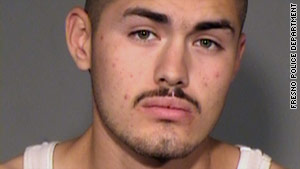 Suspect Gregorio Gonzalez, 24, faces charges that will include kidnapping, false imprisonment and sexual assault
KFSN reports on the abduction of the 8-year-old Fresno girl.
(CNN) -- Some may call it chance, but Victor Perez believes a higher power was involved Tuesday when he chased after a vehicle suspected of carrying an abducted young girl in Fresno, California.
A construction carpenter by trade until work slowed down, Perez has been recently cutting wine grapes, earning minimum wage.
Early Tuesday, there was a light rain, making that task unlikely.
Perez, 29, tuned in to television news coverage of the abduction, paying attention to the description and video of the suspect's pickup truck.
At about 6:45 a.m., Perez was outside his house talking with his cousin about the abduction when they saw a vehicle matching that description: an older-model, reddish-brown Chevrolet with a white stripe on the side.
"I thought, that could be the truck," Perez, a father of two boys, told CNN Tuesday night.
That's when he sprang into action. He jumped into his 1988 white Ford pickup and followed the vehicle.
Perez tried to cut off the vehicle several times to question the driver. One time, the driver told him, "I don't have no time [to talk]. My battery is dying."
The second time Perez pulled up to the Chevy, he saw the little girl, her head popping up from below view, and knew something was wrong.
"I kept telling him, 'That's not your little girl,'" said Perez. "We argued. We exchanged words."
Perez -- who admitted he did wonder at some point whether the motorist had a gun -- pulled up to the truck a third, and then a fourth time, when he blocked the pickup truck.
Immediately after the truck stopped, the girl was out. Perez said he believes the driver pushed her out.
"I was beyond scared," he said.
Perez got out of his vehicle and stayed with the girl. She was wearing a Winnie the Pooh sweater, he said.
The chase had taken him about a mile from his house and into another neighborhood. He yelled for residents to get the girl a blanket.
The Chevy drove off. By then, Perez had a partial license plate number, which he gave to dispatchers, Police Chief Jerry Dyer said.
About 40 minutes later, police caught up with the truck, now parked, and arrested Gregorio Gonzalez, 24, of Fresno. Charges against him will include kidnapping, false imprisonment and sexual assault, Dyer said. The suspect was not armed.
Police, officials and the parents of the girl praised Perez and other good Samaritans and citizens who aided the search and took action to find the girl.
"This is a remarkable accomplishment for an entire community," Mayor Ashley Swearengin said.
Perez said the incident was beginning to sink in Tuesday night. "I probably saved a little girl's life."
The question arises: What would have happened if Perez had gone to work this day?
He quoted a relative who said divine providence might have stepped in.
"God works in mysterious ways," Perez said.
Subscribe to:
Posts (Atom)